The Practice of Stillness: The Whisper of the Bow
1. The Mountain of Silence
The old man waits before he shoots,
And silence grows from mountain roots.
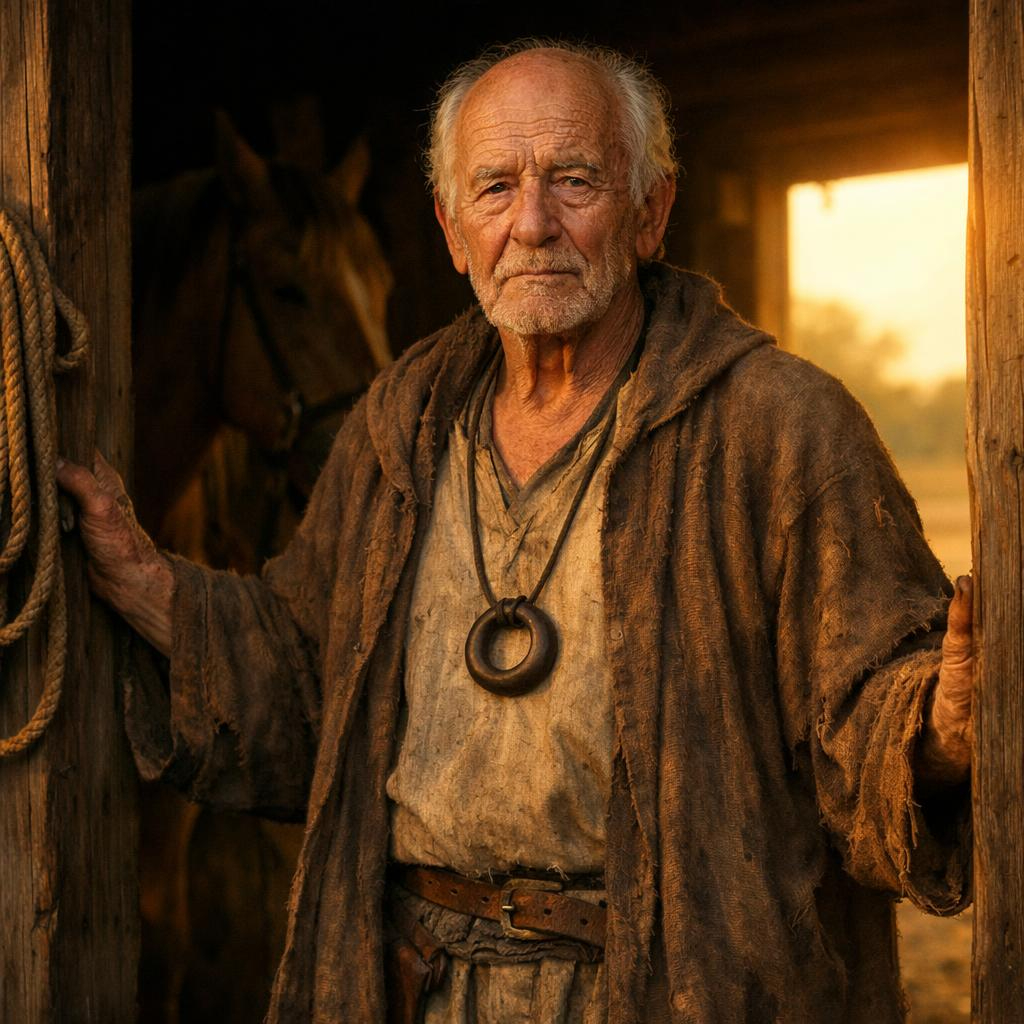
The village clung to the mountainside like a prayer whispered into stone. Mist curled through narrow streets each dawn, and in the clearing beyond the last house, an old man drew his bow.
Kael’s hands were gnarled as tree roots, yet they moved with impossible grace. Travelers who climbed the mountain path to watch him shoot would see the same thing: arrow after arrow finding its mark, each release preceded by a breath so quiet it seemed the world itself had paused to listen.
“How do you do it?” they would ask.
He never answered with words. Instead, he would draw his bow, hold the tension until their own breath caught in sympathy, then release. The arrow’s flight was secondary—what lingered was the silence before the string sang.
2. The Apprentice’s Hunger
A girl arrives demanding more,
And holds a bow without a cord.
Lira arrived in autumn, when the maples burned red against grey skies.
She was seventeen and already famous in the valley below—the governor’s daughter who’d won every archery competition from the river delta to the eastern plains. But fame had made her hungry for something she couldn’t name. She’d heard the rumors: an old archer in the mountains who never missed, never competed, never explained.
“Teach me,” she demanded, striding into Kael’s clearing without introduction.
He was sitting on a weathered stump, running his thumb along an arrow shaft, testing for imperfections invisible to the eye. He didn’t look up.
“Teach you what?”
“To shoot like you do. To never miss.”
“I miss often.”
She blinked. “The stories say—”
“The stories say what people want to hear.” He finally met her eyes. “What do you want?”
The question landed harder than she expected. In the silence that followed, Lira realized she didn’t know.
Kael stood, joints creaking, and handed her a bow. She reached for it eagerly—then froze. The bow had no string.
“First lesson,” he said. “Go sit by the pond until you understand why.”
3. The Vigil
The pond reflects her restless mind,
Until the silence she can find.
The pond lay a half-mile down the mountain, cradled in a hollow where wind rarely reached. Lira sat on the bank, the useless bow across her knees, and fumed.
This is absurd. I came here to learn archery, not to stare at water.
The first day, her mind raced like a caged animal. She catalogued everything Kael should be teaching her: stance, draw length, release technique, breathing patterns. She’d read all the treatises, practiced all the forms. What she needed was refinement, not… this.
The second day, her anger cooled to frustration. She tried meditating—sitting cross-legged, controlling her breath like she’d learned in the governor’s palace. But meditation felt like another performance, another competition against herself.
The third day, she simply sat.
And then the pond began to speak.
Not in words, but in rhythms she’d been too loud to hear. The whisper of wind across water. The click of bamboo stalks touching in the breeze. A fish rising, rings spreading outward, the surface tension holding and releasing. Her own heartbeat, gradually slowing to match the pace of the mountain itself.
On the seventh day, Kael appeared at her shoulder like morning mist.
“What have you learned?”
“That I don’t know how to be quiet,” she said. “Not really. I thought silence was just… stopping. But it’s not empty. It’s full of everything I usually talk over.”
He almost smiled. “The bow is ready for you now.”
4. The Architecture of Intention
The bow becomes a mirror true,
And shows where tension fights in you.
The strung bow felt different in her hands—not just functional, but alive. Kael placed an arrow across her palm, and its weight seemed to multiply.
“The arrow knows the truth,” he said. “It will fly where you truly aim, not where you pretend to aim. Most archers spend their lives fighting this honesty.”
He adjusted her stance, not roughly but with the precision of someone tuning an instrument. Front foot forward, weight balanced, spine straight but not rigid.
“Now, show me how you would shoot.”
Lira drew the string back to her anchor point—corner of her mouth, three fingers, elbow high—exactly as she’d been taught. The target was thirty paces away, a simple circle of straw. Easy.
“Stop.” Kael’s voice cut through her concentration. “What are you thinking about?”
“The target. The wind. My form.”
“And what are you feeling?”
She paused. “Nothing. I’m focused.”
“No. You’re performing. You’re thinking about what shooting should look like.” He moved in front of her, blocking her view of the target. “Close your eyes. Don’t imagine the target. Feel the bow. Feel the tension in your shoulders, your chest, your fingers. Where is it pulling? Where is it balanced?”
With her eyes closed, Lira became aware of a dozen small agonies: her left shoulder cramping slightly, her right hand gripping too hard, her breath held too high in her chest.
“The bow is teaching you about yourself,” Kael said quietly. “It shows you every place you’re fighting instead of flowing. Every place you’re forcing instead of allowing.”
She adjusted, bit by bit. The tension redistributed. Her breath dropped deeper. The bow stopped feeling like an opponent and started feeling like a conversation.
“Now,” Kael said, “hold this.”
“For how long?”
“Until you understand why.”
5. The Crucible of Waiting
She holds the draw till muscles shake,
And finds what strength her will can make.
Her arms began to shake within seconds. Within a minute, they screamed. But Kael didn’t tell her to release or to lower the bow. He simply sat on a nearby stone and waited.
Lira’s mind cycled through panic, anger, pleading. Why is he doing this? This is torture. I’m going to drop it. I can’t—
And then something shifted.
The pain was still there, but she stopped arguing with it. The trembling continued, but she noticed how it moved through her arms in waves, how her muscles were in constant conversation with the bow’s resistance. She found tiny adjustments that bought her seconds of relief. She discovered that when she stopped predicting when she would fail, she could last longer than she thought possible.
When Kael finally said “Release,” the arrow flew—wild and wide, missing the target entirely.
Lira wanted to scream. Instead, she found herself laughing.
“I held it so long and I didn’t even hit anything.”
“You hit exactly what you needed to hit,” Kael said. “Your own assumptions about what matters.”
6. The Dissolution of Effort
From anger, fear, and pride she shoots,
Then finds the silence at her roots.
For weeks, Kael made her repeat the same exercise. Draw, hold, release—but never aiming for the target. Instead, he taught her to aim for states of being.
“Shoot from anger,” he’d say. She’d draw, let frustration fill her chest, release. The arrow always flew crooked.
“Shoot from fear.” The arrow would flutter, uncertain.
“Shoot from pride.” It would fly hard and fast, overshooting.
“Now,” he said one morning, “shoot from nothing.”
“From nothing?”
“From the place you found at the pond. From the silence under the noise.”
Lira drew the bow. She didn’t try to empty her mind—she’d learned that was impossible. Instead, she let her thoughts be like wind through the bamboo: present, moving, but not defining the space. She felt the bow’s tension, her body’s alignment, the cool mountain air on her skin.
She released.
The arrow flew straight and true, sinking into the heart of the target with a sound like a sigh.
She turned to Kael, eyes wide. “How—”
“You stopped shooting at the target and started shooting from your center. The target was simply where the arrow needed to go.”
7. The Paradox of Mastery
Each morning makes him new again,
The master is a beginner then.
As spring turned to summer, Lira’s arrows found their mark with increasing consistency. But Kael never congratulated her on her accuracy.
Instead, he’d ask: “Where were you when you released that shot?”
Sometimes she could answer—”At the pond” or “In my breath” or “Nowhere.” Sometimes she couldn’t, and those arrows, even if they hit the target, he made her discount.
“Any fool can hit a target sometimes,” he said. “The question is: who is doing the shooting?”
One evening, as thunderclouds built over the peaks, she asked him: “Master, why do you still practice? You’ve already mastered this.”
Kael was silent for a long moment, watching lightning flicker in the distance.
“I practice because mastery is not a destination. Every morning, I am a beginner again. The bow doesn’t remember yesterday’s perfection. The wind doesn’t care about my reputation.” He turned to her. “The moment you think you’ve mastered something is the moment you stop learning from it.”
“Then what’s the point?”
“The point,” he said, “is not to achieve stillness once and claim it forever. The point is to return to it, again and again, until the returning itself becomes natural. Until the silence is not something you find but something you are.”
8. The Teaching Transmitted
A bow of yew he gives to her,
With mountain wisdom in its stir.
On the day Lira was to leave, Kael gave her a bow.
It was beautiful—aged yew wood, perfectly balanced, the string humming with perfect tension. But more than that, it felt familiar. It felt like the pond, like the mountain, like all the mornings she’d spent learning to be quiet.
“I have one last question,” she said. “Why did you accept me as a student? I came here demanding, entitled, not even knowing what I wanted.”
Kael smiled—a rare, genuine smile. “Because you were willing to sit by the pond with a useless bow for seven days without running away. Most people leave on the second day. They want the teaching without the emptiness, the skill without the silence. But archery—real archery—is not about the arrow. It’s about what you discover when you stop running from yourself.”
He paused, then added: “And because I saw in you the same hunger I had when I was young. The hunger that can be transmuted into seeking, if met with patience instead of pride.”
9. The Path Forward
Now Lira teaches by the pond,
With stringless bows and silence fond.
Twenty years later, in a valley two mountains distant, an old woman draws her bow.
Her name is Lira, though few remember the governor’s daughter who disappeared into the mountains as a girl and returned as something else. Her students—and there are always students—come seeking the same thing she once sought: certainty, precision, the secret to never missing.
She teaches them the same way she was taught.
She hands them bows without strings and points them toward a small pond beyond her house. Most leave within days. A few stay, sitting by the water until they learn to hear what the silence is saying.
To these few, she eventually teaches the bow. But she no longer speaks of “stillness” as though it were a technique to master. Instead, she speaks of what it means to be honest with the tension—the way the bow shows you where you’re forcing, where you’re flowing, where you’re fighting yourself.
“The bow is not a weapon,” she tells them, echoing words she heard a lifetime ago. “It’s a mirror.”
And when her arrows fly—and they still fly straight and true—they carry with them the memory of a pond, a useless bow, and an old man patient enough to let a proud girl learn to be quiet.
10. The Teaching
The space between the draw and flight,
Contains what makes the archer right.
What Kael understood, and what Lira came to learn, is that mastery in any form is not the accumulation of techniques but the dissolution of barriers between intention and action.
In archery, this means the space between drawing and releasing becomes transparent—not empty, but clear. The archer doesn’t disappear; she becomes precise. Not rigid, but aligned.
This is true for all disciplines. The writer who stops fighting the blank page and learns to listen for what wants to be written. The surgeon whose hands move with practiced certainty because they’ve learned to trust their training. The parent who responds to a child’s tantrum not with their own turbulence but with grounded presence.
The practice is not about eliminating emotion, thought, or difficulty. It’s about developing the capacity to act from center even when everything around you—and within you—is in motion.
It begins, as it always has, with the willingness to sit with a useless bow and wait.
In the space between drawing and releasing, in the silence before the string sings, there is a moment that contains everything: all the preparation, all the intention, all the presence you can bring. The arrow’s flight is just the echo of what happens in that moment. And the practice is learning to live there—in that space of clear tension—not just at the archery range, but in every choice, every breath, every moment that asks you to be fully present.
That is where mastery lives. Not in the target hit, but in the archer who has learned to aim true.
Stillness sharpens perception; tension refines purpose; motion completes expression. And when silence lingers after the sound fades, we realize that everything—every thought, every action, every breath—begins and ends in the practice of stillness.
Reference
Vago, D. R. & Zeidan, F. “The brain on silent: mind wandering, mindful awareness, and states of mental tranquility.” Frontiers in Human Neuroscience, 2016. Link PMC